Description du produit
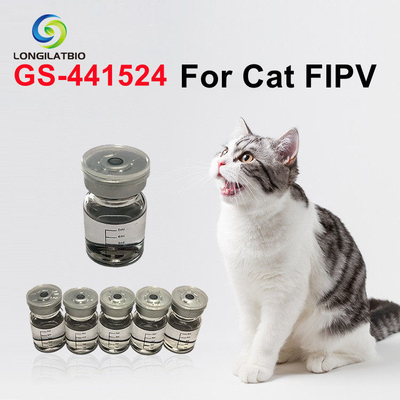
| Nom du produit |
GS-441524 |
| Date d'expiration |
1 an à compter de la date de fabrication |
| Condition de stockage |
Température ambiante |
| Numéro CAS |
1191237-69-0 |
| Fonction principale |
Traitement de la PIF féline |
| Forme galénique |
Injection |
| Pays de fabrication |
Chine |
| Spécifications d'emballage |
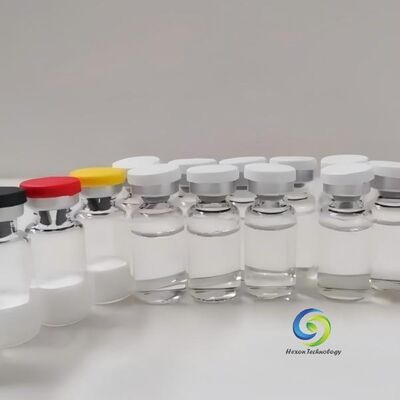
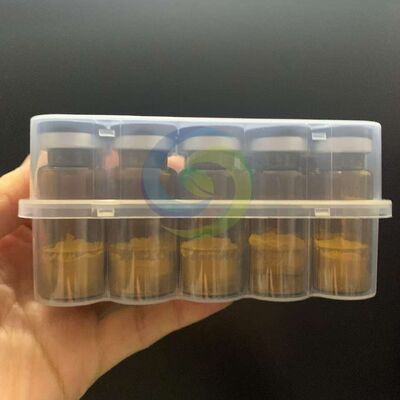
6 ml/flacon, 8 ml/flacon, 10 ml/flacon |
| Force active |
20 mg, 30 mg |
Le GS-441524 est un analogue nucléosidique doté d'une activité antivirale spécifique contre le coronavirus félin (FCoV), l'agent pathogène responsable de la péritonite infectieuse féline (PIF). Son mode d'action cible l'ARN polymérase ARN-dépendante virale, une enzyme essentielle à la réplication et à la prolifération du FCoV dans les cellules hôtes félines. En tant qu'analogue structurel des nucléosides naturels, le GS-441524 est utilisé sélectivement par cette enzyme virale lors de la synthèse de l'ARN viral. Une fois intégré dans la chaîne d'ARN naissante, il lui manque les groupes chimiques nécessaires pour soutenir l'élongation ultérieure de la chaîne, ce qui interrompt efficacement la réplication virale et empêche la production de nouvelles particules virales infectieuses.
En tant que métabolite bioactif principal du remdésivir, un promédicament antiviral, le GS-441524 présente des propriétés pharmacocinétiques favorables chez les mammifères, avec une demi-vie de 24 heures. Cette longue demi-vie garantit que le médicament maintient une concentration constante et efficace dans le corps du chat après administration, assurant une inhibition antivirale soutenue. Chez les chats infectés par la PIF, le GS-441524 agit directement sur les phagocytes mononucléés infectés par le FCoV, le principal type de cellule ciblé par le virus, réduisant la charge virale et atténuant la réponse inflammatoire excessive et les lésions tissulaires déclenchées par l'infection virale. Cela permet au système immunitaire du chat de retrouver sa capacité antivirale normale et d'éliminer progressivement le virus de l'organisme.
À propos de la péritonite infectieuse féline (PIF)
La péritonite infectieuse féline (PIF) est une maladie virale systémique grave, presque toujours mortelle chez les chats domestiques si elle n'est pas traitée, causée par la mutation de souches virulentes du coronavirus félin (FCoV). Le FCoV est très répandu dans les populations de chats du monde entier, la transmission se faisant principalement par voie fécale-orale. Les litières contaminées, les gamelles de nourriture et d'eau, et le contact direct avec des chats infectés sont les principales sources de transmission, le virus survivant sur les surfaces environnementales pendant de longues périodes, augmentant le risque d'infection dans les environnements où vivent plusieurs chats, tels que les chatteries, les refuges et les foyers multi-chats.
La plupart des chats infectés par le FCoV restent asymptomatiques ou ne développent que des signes intestinaux légers, car leur système immunitaire sain peut confiner le virus dans le tractus gastro-intestinal et prévenir la propagation systémique. La PIF ne se développe que lorsque la fonction immunitaire d'un chat est compromise - cela est le plus fréquent chez les jeunes chatons (6-12 semaines), les chats âgés, ou les chats ayant des problèmes de santé sous-jacents ou un stress chronique. Chez ces chats immunodéprimés, le FCoV subit des mutations génétiques qui lui permettent d'échapper à l'immunité de la muqueuse intestinale, d'envahir le système des phagocytes mononucléés et de se propager systémiquement par la circulation sanguine, entraînant des lésions tissulaires généralisées et le développement de la PIF.

Cliniquement, la PIF est classée en deux formes principales : effusive (humide) et non-effusive (sèche). La PIF effusive représente environ 70 % des cas et se caractérise par l'accumulation d'un exsudat épais et jaunâtre dans la cavité abdominale, la cavité thoracique, ou les deux, provoquant une distension abdominale, des difficultés respiratoires et une perte de poids. La PIF non-effusive se caractérise par des lésions granulomateuses dans plusieurs organes, notamment le foie, les reins, la rate et les ganglions lymphatiques, les symptômes variant en fonction des organes affectés - les signes courants comprennent une fièvre persistante, une léthargie, une perte d'appétit et une jaunisse. L'atteinte oculaire et neurologique est également fréquente dans la PIF sèche, se manifestant par une uvéite, une ataxie, des convulsions ou une perte de vision.
Le diagnostic de la PIF est notoirement difficile en raison de la nature non spécifique de ses signes cliniques et de ses résultats de laboratoire. Un diagnostic préliminaire est généralement établi par une combinaison d'antécédents épidémiologiques, d'examen clinique, d'analyses sanguines (augmentation des gammaglobulines, hypoalbuminémie, lymphopénie) et d'imagerie (échographie montrant un épanchement abdominal ou des granulomes d'organes). Pour la PIF effusive, l'analyse du liquide abdominal ou thoracique - montrant une teneur élevée en protéines, un faible nombre de cellules nucléées et une détection positive d'acide nucléique du FCoV - fournit des preuves diagnostiques solides. L'examen histopathologique des échantillons de tissus reste la méthode de référence pour un diagnostic définitif. Actuellement, il n'existe pas de vaccin universellement efficace contre la PIF, et la prévention vise à réduire l'exposition au FCoV, à minimiser le stress et à soutenir la santé immunitaire des chats.
Application et dosage du GS-441524
Le GS-441524 est un agent antiviral utilisé hors indication en pratique clinique vétérinaire pour le traitement de la péritonite infectieuse féline, avec une efficacité prouvée contre les formes effusives et non-effusives de la maladie. Le médicament est formulé sous forme de solution injectable, adaptée à l'administration sous-cutanée ou intrapéritonéale chez les chats, et son dosage est adapté aux besoins individuels du chat en fonction de son poids corporel, de la forme de PIF et de la présence de complications telles que l'atteinte oculaire ou neurologique.
Les vétérinaires peuvent ajuster le dosage et le traitement en fonction de la réponse clinique du chat, y compris l'amélioration des symptômes, la réduction de la charge virale et la prise de poids. Une administration cohérente et standardisée est essentielle pour obtenir des résultats thérapeutiques optimaux et réduire le risque de récidive de la maladie.
Régime de dosage recommandé:PIF (type humide) : 0,3 ml/kg de poids corporel + 0,1 ml de résidu, administration injectable
- PIF (type sec) : 0,4 ml/kg de poids corporel + 0,1 ml de résidu, administration injectable
- PIF avec atteinte oculaire/neurologique : 0,5 ml/kg de poids corporel + 0,1 ml de résidu, administration injectable
- Cas de PIF récurrente : 0,6 ml/kg de poids corporel + 0,1 ml de résidu, administration injectable


 Votre message doit contenir entre 20 et 3 000 caractères!